On March 25, 2026, Google's security engineering team published a quiet but seismic blog post. In it, they set a firm internal deadline: 2029.
That's the year by which they intend to complete migration to post-quantum cryptography — a new generation of encryption built to survive the computing power of quantum machines. The subtext was unmistakable.
For those of us in crypto, the implications land differently than they do for, say, a bank's IT team. Bitcoin and Ethereum sit on cryptographic foundations: digital signatures, chain integrity, wallet security, which, quantum computers, at sufficient scale, could theoretically dismantle in minutes.
We're talking about $1.6 trillion in combined market value resting on math that a quantum machine might one day solve like a warm-up puzzle.
Here's the simple version: every Bitcoin wallet has a public key and a private key. The public key is what people use to send you money; the private key is what proves the wallet is yours.
Today's encryption makes it practically impossible to reverse-engineer one from the other. It would take classical computers longer than the age of the universe, whereas a sufficiently powerful quantum computer could do it in hours.
That means any wallet with a visible public key, which includes every wallet that has ever made a transaction,becomes a potential target. Not hacked in the dramatic Hollywood sense. Just... mathematically unlocked.
I'll be honest: I was never fully sold on the doom narrative that circulated through late 2025. Yes, some investment managers quietly trimmed exposure. Yes, the chatter on my feeds got heated. But the economic incentives always seemed too strong. Surely blockchain developers would upgrade in time. Quantum computing felt like a distant weather event, not a storm already forming offshore.
Then Nic Carter the golden crypto expert started pushing harder. He's been doing careful, urgent work flagging that the quantum horizon is closer than most people want to believe. He got prickly pushback, which is normal as people will always be complacent about threats that don't yet have a date on them.
But now, one does.
The most interesting thing to me is that while the world make this about crypto, it really isn't.
Bitcoin might actually be the least of our collective problems if these threats are any good.
The same cryptographic architecture that protects your Bitcoin wallet also protects your bank. Your mobile network. The power grid. Hospital records. Military communications. The financial clearing systems that move trillions of dollars every day operate on encryption standards that were built for a pre-quantum world; because that's the only world that existed when they were designed.
What makes crypto's situation unique is not that it's more vulnerable than these other systems. It's that it's more transparent about the vulnerability, and paradoxically, more capable of moving fast. Blockchain networks can, in principle, coordinate protocol upgrades. Banks cannot rewrite their core systems in three years. Telecoms cannot. Utilities definitely cannot.
So perhaps the honest frame isn't "the death of crypto." It's more like: crypto is the canary in a very large, very crowded mine.
Google's post-quantum clock is now running. Android 17 is already integrating quantum-resistant digital signatures. The National Institute of Standards and Technology has published its new cryptographic standards. The engineering community, slowly and then suddenly, is treating 2029 not as a target but as a deadline.
Three years is not long. But it is time — if we use it.
The question for anyone in this space isn't whether to panic. It's whether the developers, the protocols, the communities, and yes, the investors, are taking this seriously enough to act before the clock runs out.
Complacency, after all, has always been the real threat.
On-Chain Media articles are for educational purposes only. We strive to provide accurate and timely information. This information should not be construed as financial advice or an endorsement of any particular cryptocurrency, project, or service. The cryptocurrency market is highly volatile and unpredictable.Before making any investment decisions, you are strongly encouraged to conduct your own independent research and due diligence
Tags :

0 Comments
Show More
Nvidia falls as AI-safety concerns, DOJ scrutiny of its $17 billion Groq licensing deal and profit-taking pressure weigh on shares.

Bitcoin faces rising Fed rate-hike odds, a hawkish ECB, and a make-or-break Senate cloture vote on the CLARITY Act — all landing in the same five-day window.
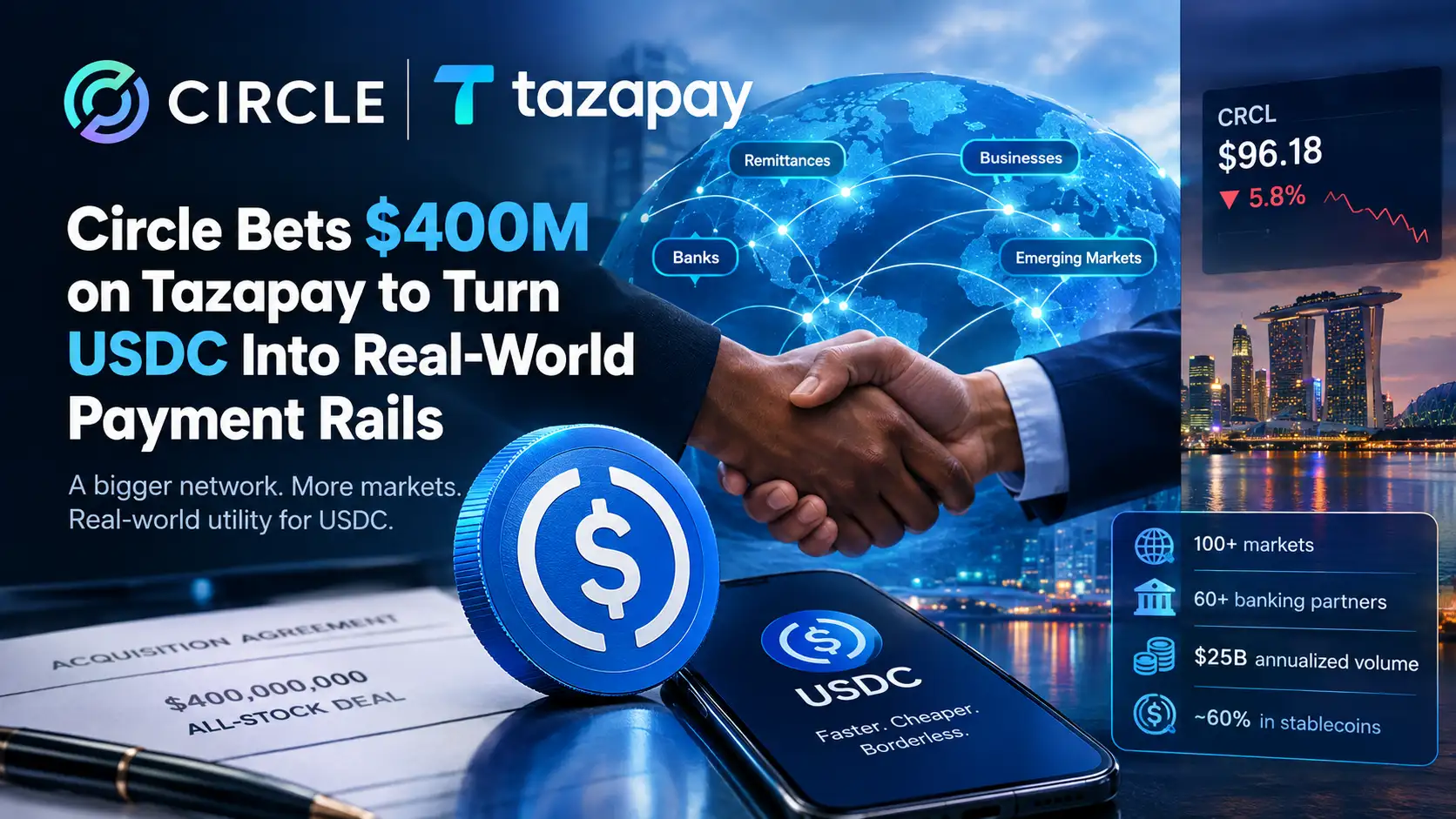
Circle's largest deal since Poloniex brings a licensed cross-border payments network in-house.
On-Chain Media is an independent, reader-funded crypto media platform. Kindly consider supporting us with a donation.
bc1qp0a8vw82cs508agere759ant6xqhcfgcjpyghk
0x18d7C63AAD2679CFb0cfE1d104B7f6Ed00A3A050
CBaXXVX7bdAouqg3PciE4HjUXAhsrnFBHQ2dLcNz5hrM
Contains the last 12 releases