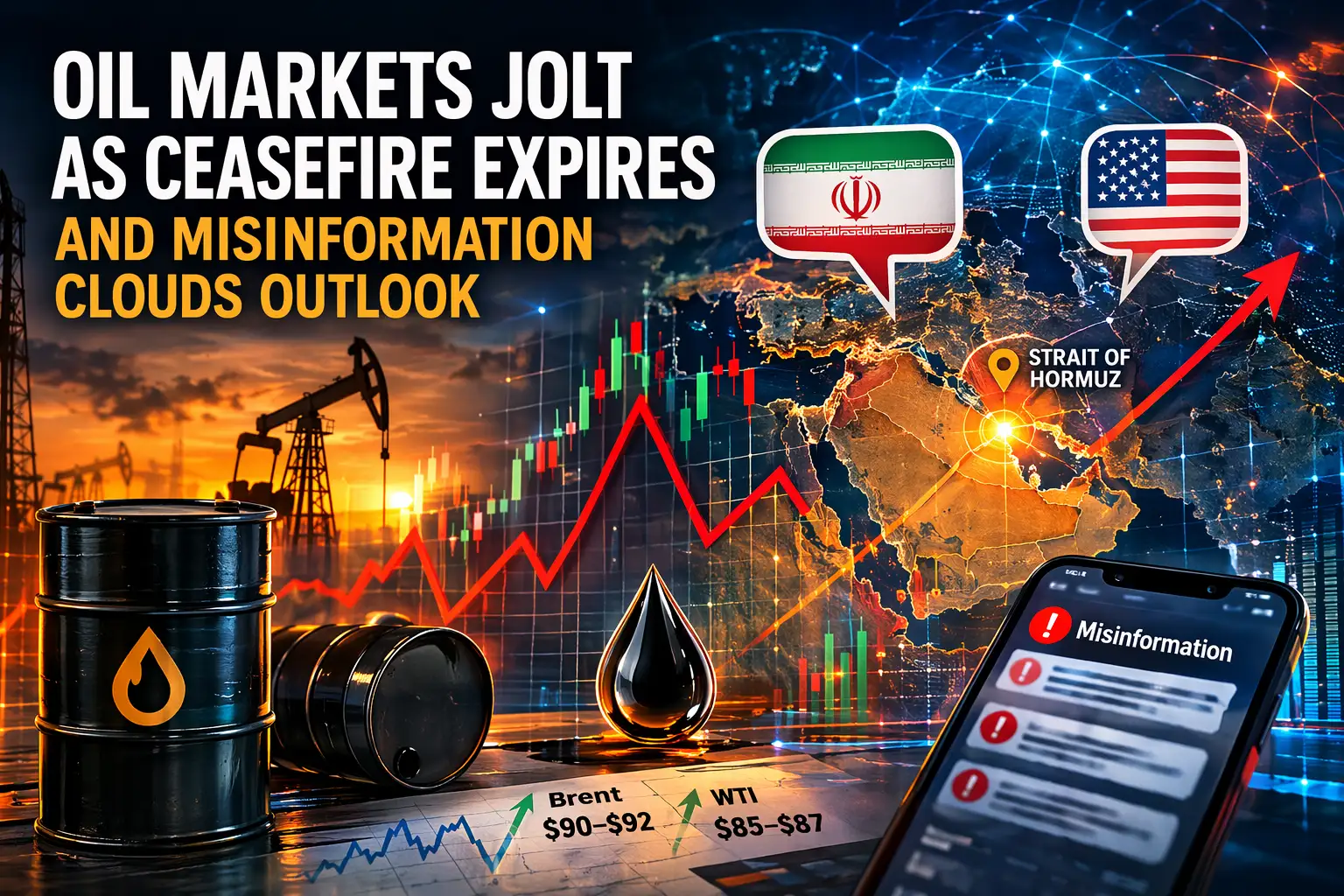
Oil markets reacted swiftly to the expiry of the Iran–U.S.-linked ceasefire, with traders pricing in a higher probability of renewed tensions across the Middle East.
In early trading, Brent crude pushed toward the low-$90s, while WTI climbed into the mid-to-high $80s, reflecting a renewed geopolitical risk premium.
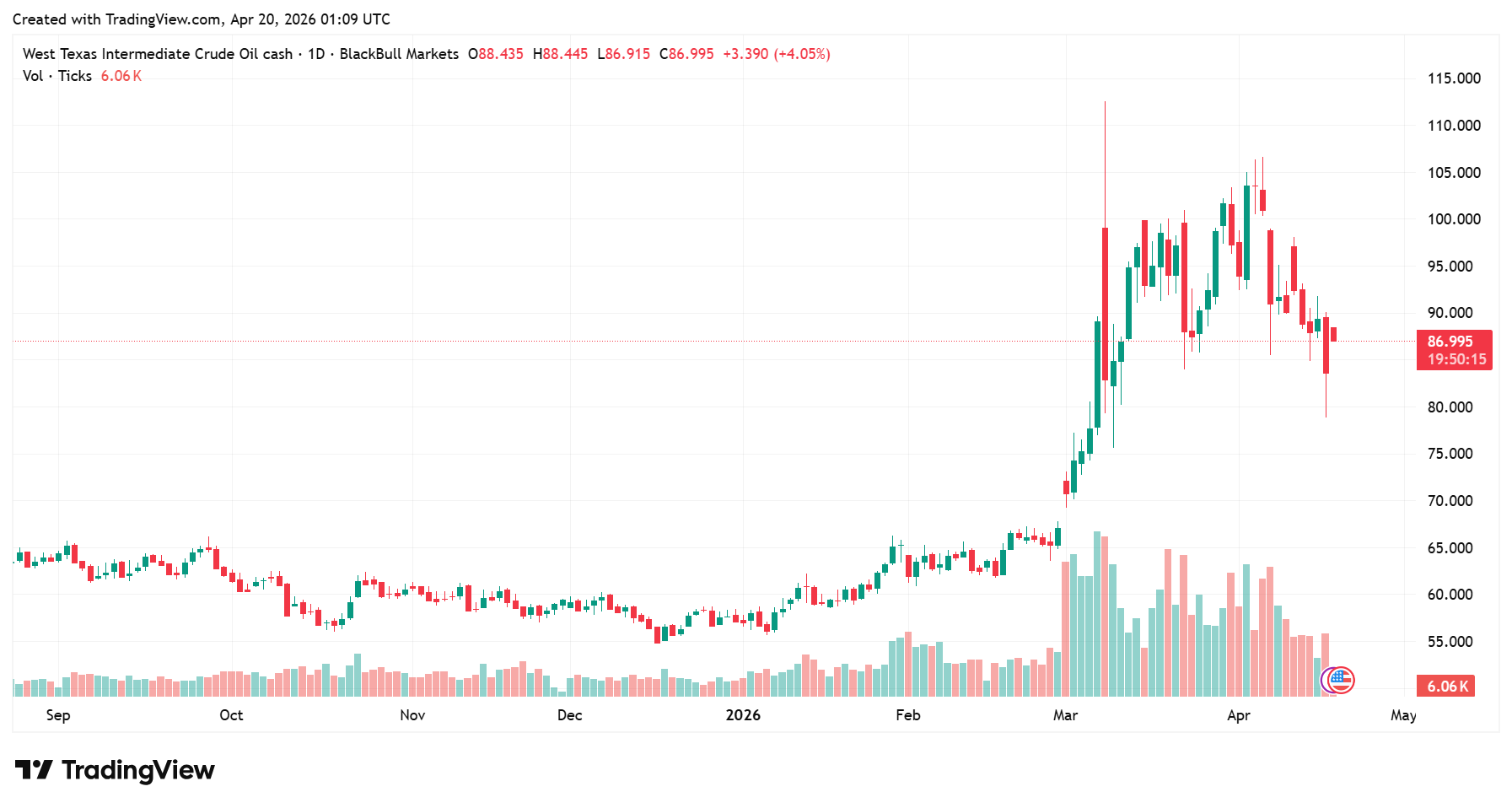
WTI Crude Oil Daily Chart: Trading View
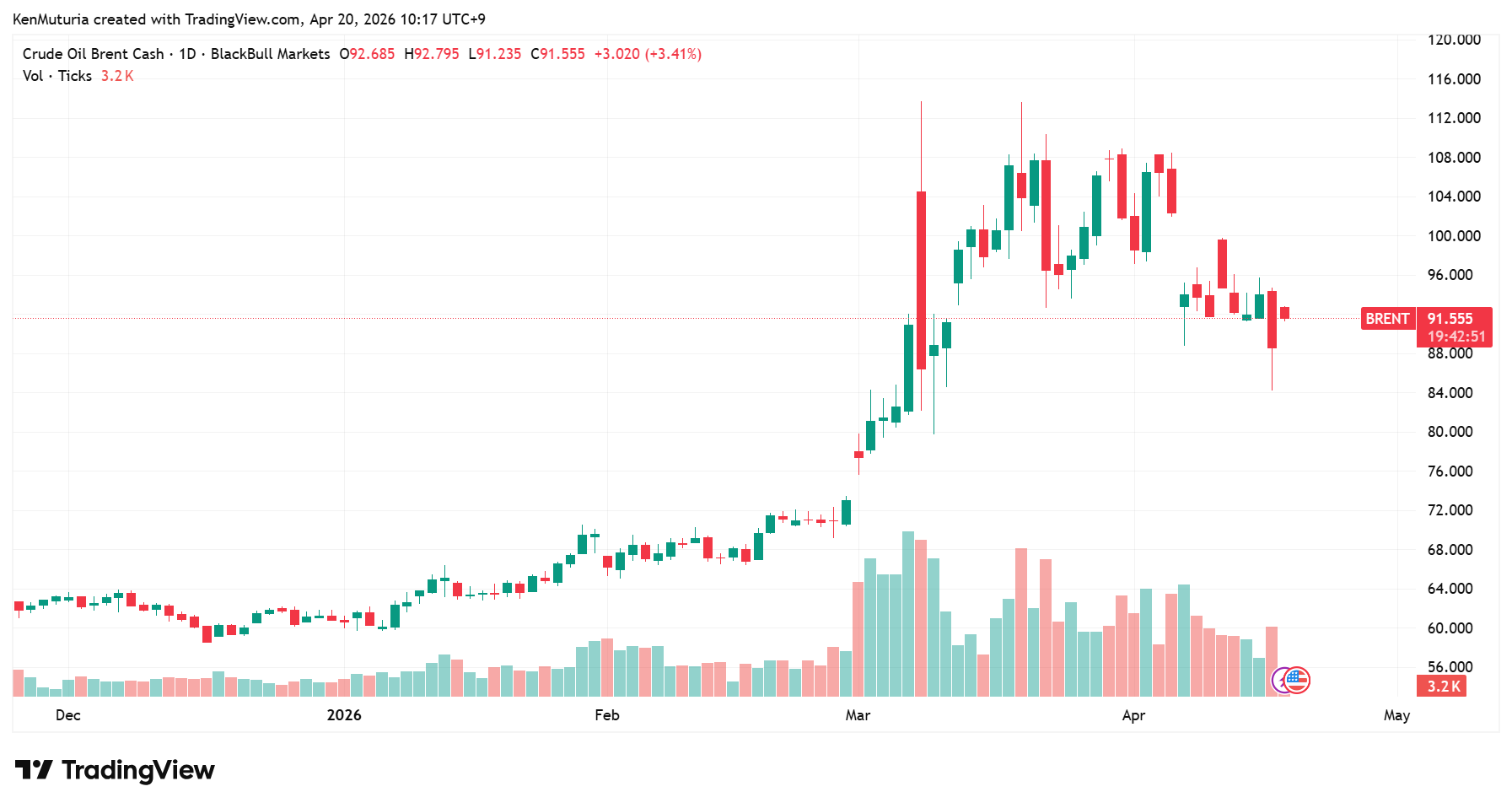
Brent Crude Oil Daily Chart: Trading View
However, similar to the sharp move observed on April 13, gains proved difficult to sustain. Prices pulled back intraday as traders reassessed the likelihood of actual escalation versus political signaling.
This pattern, rapid spikes followed by hesitation, has become a defining feature of the current oil market, where uncertainty dominates over fundamentals.
A major driver behind this instability is the flow of conflicting and often unverified information from both Iran and the United States. Statements regarding military readiness, shipping safety, and potential retaliation have frequently contradicted on-the-ground realities.
For traders, this creates a significant challenge: pricing oil based on incomplete or unreliable information. As a result, markets are increasingly prone to overreaction, followed by equally sharp corrections once narratives are questioned.
The Strait of Hormuz remains central to these concerns. Even rumors of disruption in this critical passage can move prices instantly, despite no confirmed impact on actual oil flows.
A recent post from DeFiTracer reinforces the growing disconnect between headlines and market conviction:
DeFiTracer’s view aligns closely with recent price action, suggesting that markets are increasingly fading extreme geopolitical narratives, particularly when they are driven by conflicting or unverifiable claims.
Rather than treating every escalation headline as a structural shift, traders are responding tactically, buying initial fear, then selling once doubts emerge. This behavior was clearly visible during the April 13 session, when oil surged over 10% at the open before closing with more modest gains near 5%.
The implication is significant: misinformation is no longer just noise—it is actively shaping volatility patterns, creating exaggerated moves that lack follow-through.
The combination of ceasefire expiry and unreliable information flows is exposing structural weaknesses in oil pricing. Traditionally, markets rely on a mix of fundamentals and credible geopolitical signals. Today, that balance is breaking down.
Instead of steady trend formation, oil is now trading in sharp, reactive bursts:
This creates a fragmented pricing environment where short-term traders dominate, and long-term positioning becomes more difficult.
In the near term, oil is likely to remain highly volatile, with Brent fluctuating in the $88–$92 range and WTI holding in the mid-$80s. The market is effectively stuck between two competing forces:
A confirmed disruption, such as an actual blockage in the Strait of Hormuz, would likely push prices sharply higher, potentially toward $100 per barrel.
Conversely, if tensions stabilize or misinformation is clarified, the current risk premium could unwind quickly, dragging prices lower.
The expiry of the ceasefire has reintroduced tension into oil markets, but it is the lack of clarity and conflicting information that is having the greatest impact. Prices are no longer reacting purely to events, but to interpretations of those events, many of which change by the hour.
Until reliable signals emerge, oil markets will remain trapped in a cycle of reaction and reversal. In this environment, uncertainty is not just a factor, it is the market itself.
On-Chain Media articles are for educational purposes only. We strive to provide accurate and timely information. This information should not be construed as financial advice or an endorsement of any particular cryptocurrency, project, or service. The cryptocurrency market is highly volatile and unpredictable.Before making any investment decisions, you are strongly encouraged to conduct your own independent research and due diligence
Tags :

0 Comments
Show More
Nvidia falls as AI-safety concerns, DOJ scrutiny of its $17 billion Groq licensing deal and profit-taking pressure weigh on shares.
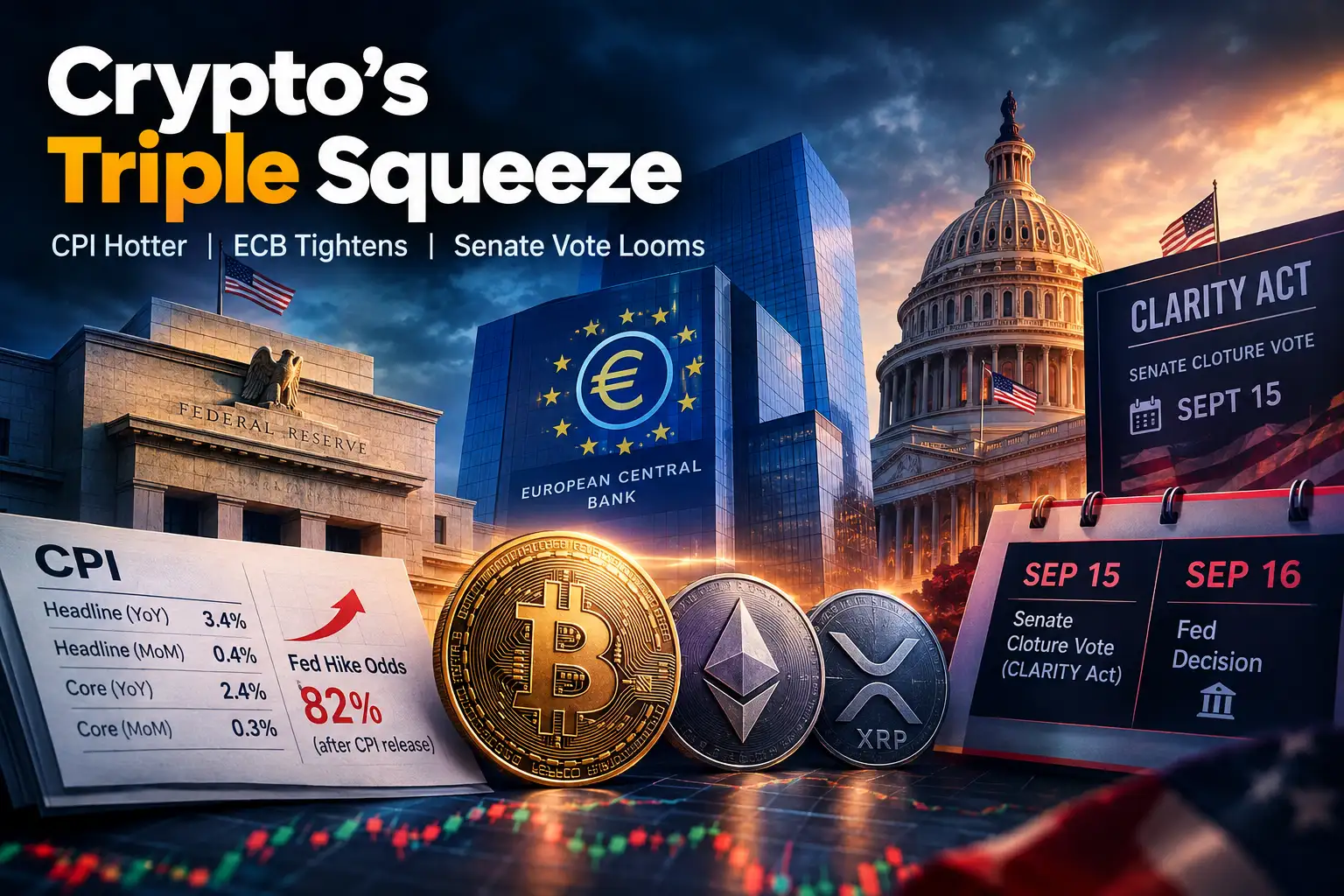
Bitcoin faces rising Fed rate-hike odds, a hawkish ECB, and a make-or-break Senate cloture vote on the CLARITY Act — all landing in the same five-day window.
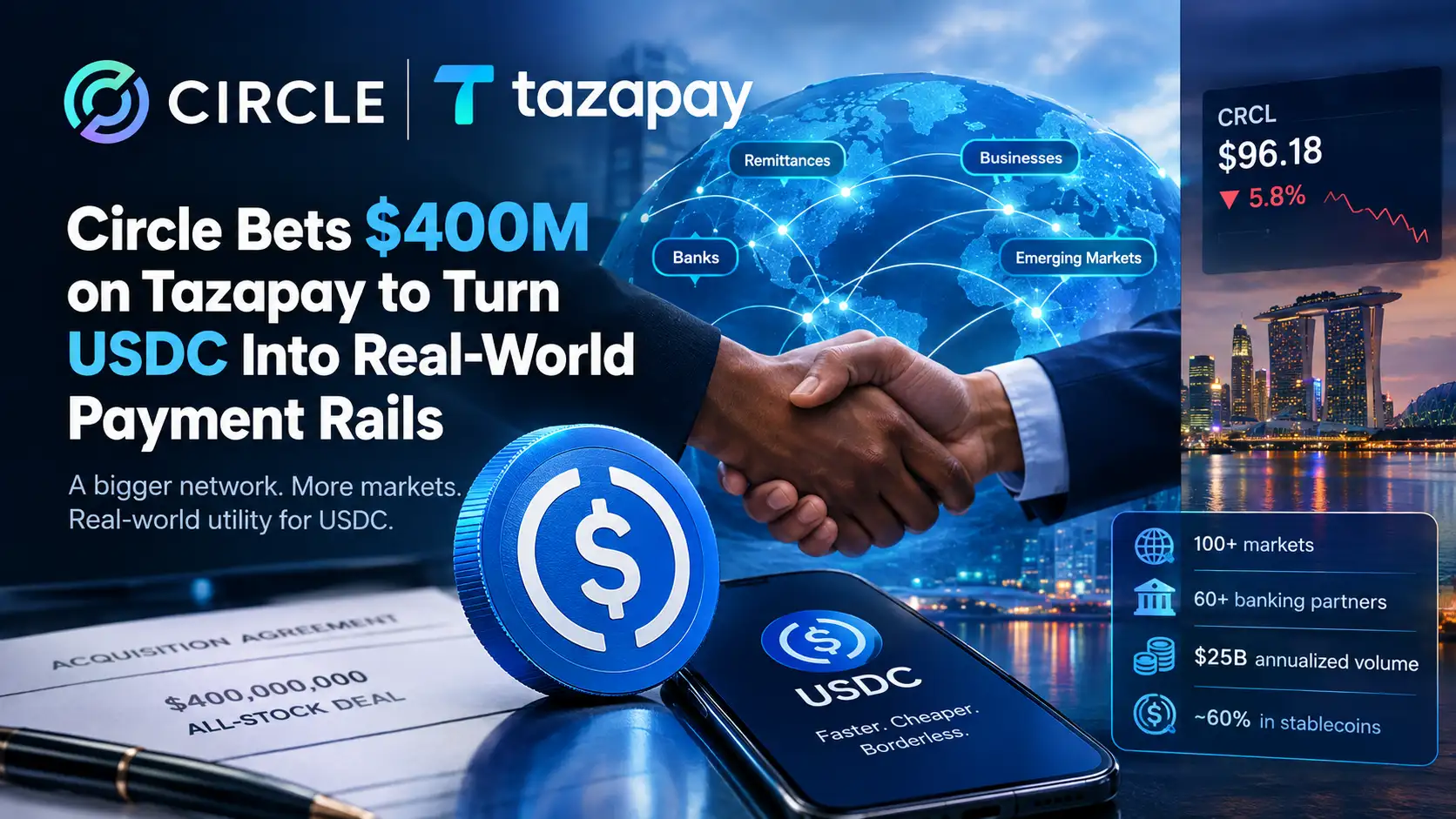
Circle's largest deal since Poloniex brings a licensed cross-border payments network in-house.
On-Chain Media is an independent, reader-funded crypto media platform. Kindly consider supporting us with a donation.
bc1qp0a8vw82cs508agere759ant6xqhcfgcjpyghk
0x18d7C63AAD2679CFb0cfE1d104B7f6Ed00A3A050
CBaXXVX7bdAouqg3PciE4HjUXAhsrnFBHQ2dLcNz5hrM
Contains the last 12 releases