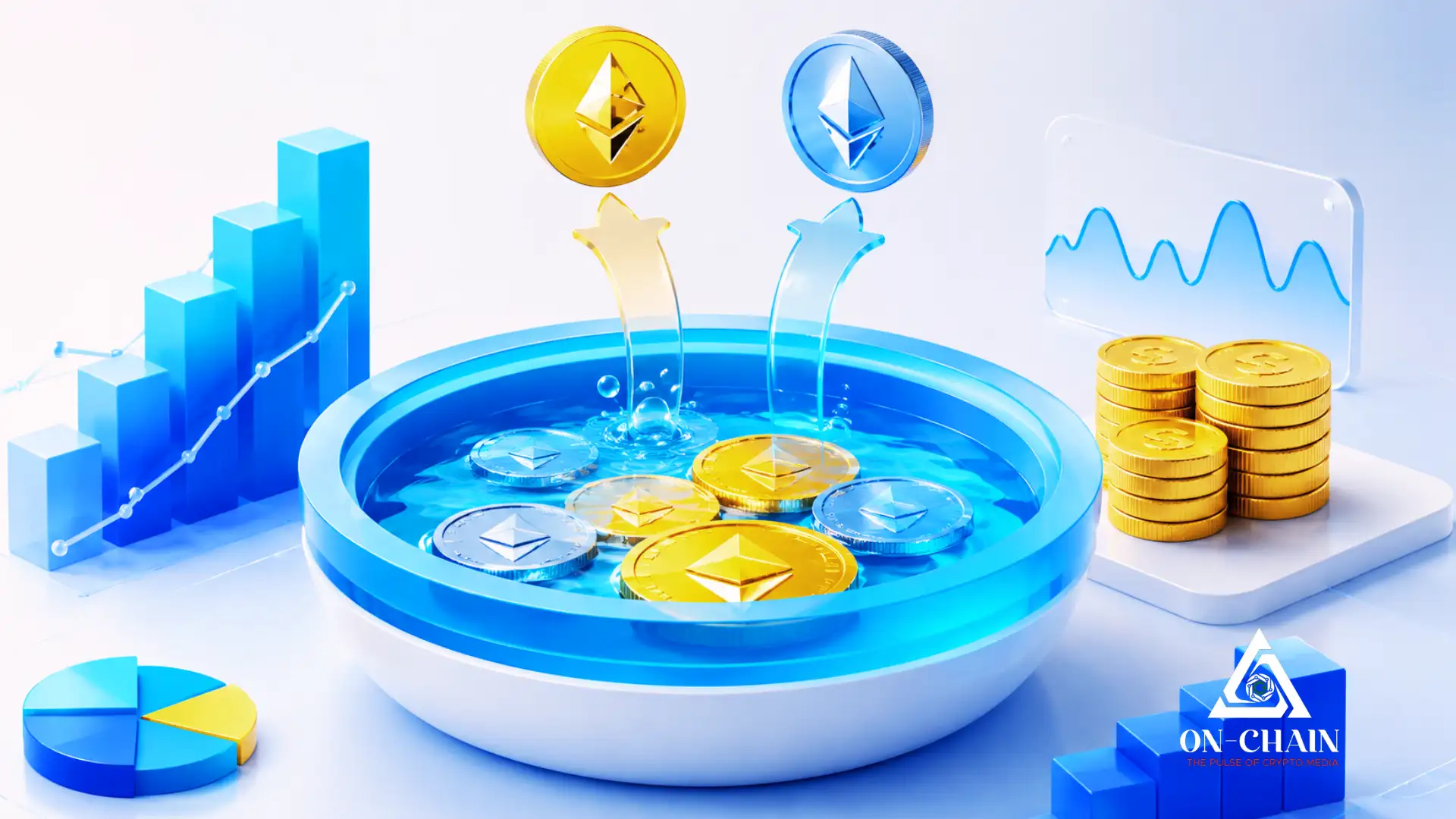
Liquidity pools are among the technologies that enable decentralised finance (DeFi) to function without traditional financial intermediaries.
A liquidity pool is a collection of cryptocurrencies locked in a smart contract that enables users to trade digital assets on decentralized exchanges (DEXs) without relying on an order book.
Instead of waiting for buyers and sellers to match, traders interact directly with the assets held in the pool through automated market makers (AMMs).
This system keeps decentralized markets active around the clock while giving users who supply liquidity an opportunity to earn a share of trading fees. As the DeFi ecosystem has grown, liquidity pools have expanded far beyond simple token swaps.
They now support a wide range of blockchain-based financial services, including lending, borrowing, yield farming and liquidity mining. Understanding how they operate is important because they form the foundation of many decentralized applications while introducing both opportunities and risks for participants.
A liquidity pool is a reserve of digital assets locked inside a smart contract to support trading on decentralized exchanges. Unlike traditional exchanges, which depend on buyers and sellers placing matching orders, decentralized platforms allow users to trade directly against assets already available in the pool. This approach removes the need for centralized market makers and enables transactions to take place at any time.
Since the liquidity is already available, traders do not have to wait for another participant to complete an order. The process is entirely managed by smart contracts that execute transactions automatically once predefined conditions are met.
The assets within these pools are supplied by liquidity providers, commonly known as LPs. Anyone holding compatible tokens can contribute funds to a pool and receive LP tokens representing their ownership share.
In return, liquidity providers earn a portion of the trading fees generated whenever users swap assets through that pool. Some protocols also reward participants through liquidity mining or yield farming programs, providing an additional source of returns. The concept was first introduced by Bancor on Ethereum before gaining wider adoption after Uniswap demonstrated how automated liquidity could efficiently power decentralized trading.
Automated market makers, or AMMs, are the mechanism that allows decentralized exchanges to function without a traditional order book. Rather than matching buyers with sellers, these smart contracts use mathematical formulas to calculate prices and execute trades automatically.
The pricing model most commonly associated with AMMs is based on the constant product formula: x × y = k, here, x represents the amount of one token held in the pool, y represents the amount of the second token, and k is a constant value that remains unchanged after every transaction.
When a trader swaps one asset for another, the balance of both tokens changes. The AMM immediately recalculates the exchange rate to preserve the constant product, ensuring that trading can continue without interruption.
This mechanism allows decentralized exchanges to remain operational at all times without relying on centralized infrastructure. AMM technology has also evolved over time.
Early models focused on basic token swaps, while newer designs introduced concentrated liquidity, stablecoin-focused pricing models, and multi-asset pools to improve capital efficiency and trading performance.
The constant product formula forms the mathematical foundation of many decentralized exchanges by ensuring that liquidity remains available regardless of trading activity.
For example imagine a pool containing 300 units of Token A and 900,000 units of Token B. If a trader purchases 30 units of Token A the available balance of that token decreases while the amount of Token B in the pool increases.
To maintain the constant product, the smart contract automatically adjusts the exchange rate causing the price of Token A to rise as its supply becomes more limited. This automatic adjustment explains why larger trades often experience more slippage than smaller ones. Slippage is the difference between the expected price of a trade and the final execution price.
Pools with greater liquidity generally experience less slippage because they can absorb larger transactions with smaller price movements. Arbitrage also plays an important role in keeping prices accurate.
If the value of assets inside a pool differs from prices on other exchanges, arbitrage traders quickly take advantage of the difference by buying and selling across multiple platforms. Their activity helps bring prices back into line with the wider market and supports efficient price discovery.
Liquidity providers play a central role in keeping decentralized exchanges operational by supplying the assets that traders use for swaps. In return for depositing tokens into a liquidity pool they receive LP tokens that represent their proportional ownership of the pool. Each time a trade takes place, the protocol collects a transaction fee and distributes it among liquidity providers according to their share of the pool.
This allows participants to generate passive income while their assets remain available for trading. Many DeFi protocols also offer additional incentives through liquidity mining or yield farming. Under these programs, participants may receive governance tokens alongside their share of trading fees.
These rewards differ from one platform to another and can change as market conditions and protocol incentives evolve. Returns vary depending on the type of pool. Stablecoin pools generally provide steadier but lower returns because the assets maintain similar values.
Pools containing more volatile cryptocurrencies can generate higher fee income during periods of strong trading activity although they also expose liquidity providers to greater market risk. Several leading decentralized finance platforms, including Uniswap, Curve, PancakeSwap, Balancer and SushiSwap continue to use different liquidity pool models to support trading across a wide range of digital assets while serving different user needs.
Providing assets to a liquidity pool can generate passive income, but it also involves risks that should be carefully evaluated before committing funds. One of the most common risks is impermanent loss. This occurs when the value of the deposited tokens changes after they enter the pool. As prices move, the AMM automatically rebalances the assets to maintain its pricing formula.
As a result, liquidity providers may withdraw a different combination of tokens than they originally deposited. In some situations, the final value can be lower than simply holding those assets in a personal wallet.
Independent research on Uniswap V3 suggests that many liquidity providers have struggled to outperform a buy-and-hold strategy because trading fees do not always offset the impact of impermanent loss, particularly in pools containing highly volatile assets.
Security is another important factor. Since decentralized finance relies on smart contracts, software bugs or vulnerabilities can expose deposited assets to risk. DeFi exploits have resulted in hundreds of millions of dollars in losses over recent years, highlighting the importance of choosing reputable protocols with audited smart contracts and established security practices. While audits reduce risk, they cannot eliminate it entirely.
Users should also be aware of rug pulls. In these cases, fraudulent projects attract liquidity before removing the deposited assets from the protocol. Reviewing project documentation, verifying smart contract addresses, checking available audits, and beginning with small test deposits can help reduce exposure to these risks.
Different liquidity pool models are designed to support different assets, trading objectives, and levels of risk. Traditional pools generally contain two cryptocurrencies with equal value allocations and remain the standard format across many decentralized exchanges. Stablecoin pools combine assets designed to maintain similar values.
Since price movements between these assets are usually limited, these pools often experience lower slippage and reduced exposure to impermanent loss. Multi-asset pools support several cryptocurrencies with customizable weightings, giving participants greater flexibility when building diversified positions.
Some protocols also offer single-sided pools, allowing users to contribute one asset instead of depositing equal values of two different tokens. Another significant innovation is concentrated liquidity. Popularized by Uniswap V3 and expanded through newer protocol designs, this model allows providers to allocate capital within selected price ranges rather than across the entire price curve.
This improves capital efficiency but often requires more active management because rewards stop accumulating once prices move outside the chosen range. Some DeFi platforms have also introduced pools backed by tokenized real-world assets such as bonds, commodities, and real estate, reflecting the growing integration of blockchain technology with traditional financial markets.
Getting started with a liquidity pool generally follows a straightforward process, although individual platforms may have different interfaces and requirements. The first step is selecting a reputable decentralized finance platform that supports the preferred assets and matches the user's investment objectives.
Before depositing funds, users are generally advised to verify smart contract addresses, review available security audits, and avoid allocating more capital than they can afford to lose. After connecting a compatible crypto wallet, users deposit the required assets into the selected pool. The protocol then issues LP tokens representing the provider's ownership share.
These LP tokens allow participants to collect trading fees and, on some platforms, qualify for additional rewards through liquidity mining or yield farming. When users decide to withdraw, they redeem their LP tokens and receive their proportional share of the pool together with any accumulated earnings, subject to changes in token prices during the holding period.
The basic concept behind decentralized liquidity has remained consistent, but the technology supporting it continues to advance. Early automated market makers focused primarily on replacing traditional order books with mathematical pricing models.
Since then, developers have introduced concentrated liquidity, improved pricing mechanisms, and more efficient methods of allocating capital to increase trading efficiency.
Newer protocol designs also provide greater flexibility by allowing developers to customize how pools operate while improving capital efficiency for different trading strategies. Other innovations focus on routing transactions across multiple liquidity sources to help users achieve better execution instead of relying on a single pool.
These developments demonstrate how decentralized finance continues to refine its infrastructure while preserving the permissionless access that has defined the ecosystem from the beginning.
Liquidity pool technology has become one of the foundations of decentralized finance by allowing users to trade digital assets without centralized intermediaries or traditional order books. Through smart contracts and automated market makers, these pools provide continuous market access while giving liquidity providers an opportunity to earn a share of transaction fees.
At the same time, participation should always be approached with a clear understanding of both the opportunities and the risks. Impermanent loss, smart contract vulnerabilities, and fraudulent projects remain important considerations when evaluating any protocol.
Understanding how liquidity pools operate, how rewards are generated, and how risks can be managed gives users a stronger foundation for making informed decisions as decentralized finance continues to evolve.
On-Chain Media articles are for educational purposes only. We strive to provide accurate and timely information. This information should not be construed as financial advice or an endorsement of any particular cryptocurrency, project, or service. The cryptocurrency market is highly volatile and unpredictable.Before making any investment decisions, you are strongly encouraged to conduct your own independent research and due diligence
Tags :

0 Comments
Show More

Nvidia falls as AI-safety concerns, DOJ scrutiny of its $17 billion Groq licensing deal and profit-taking pressure weigh on shares.
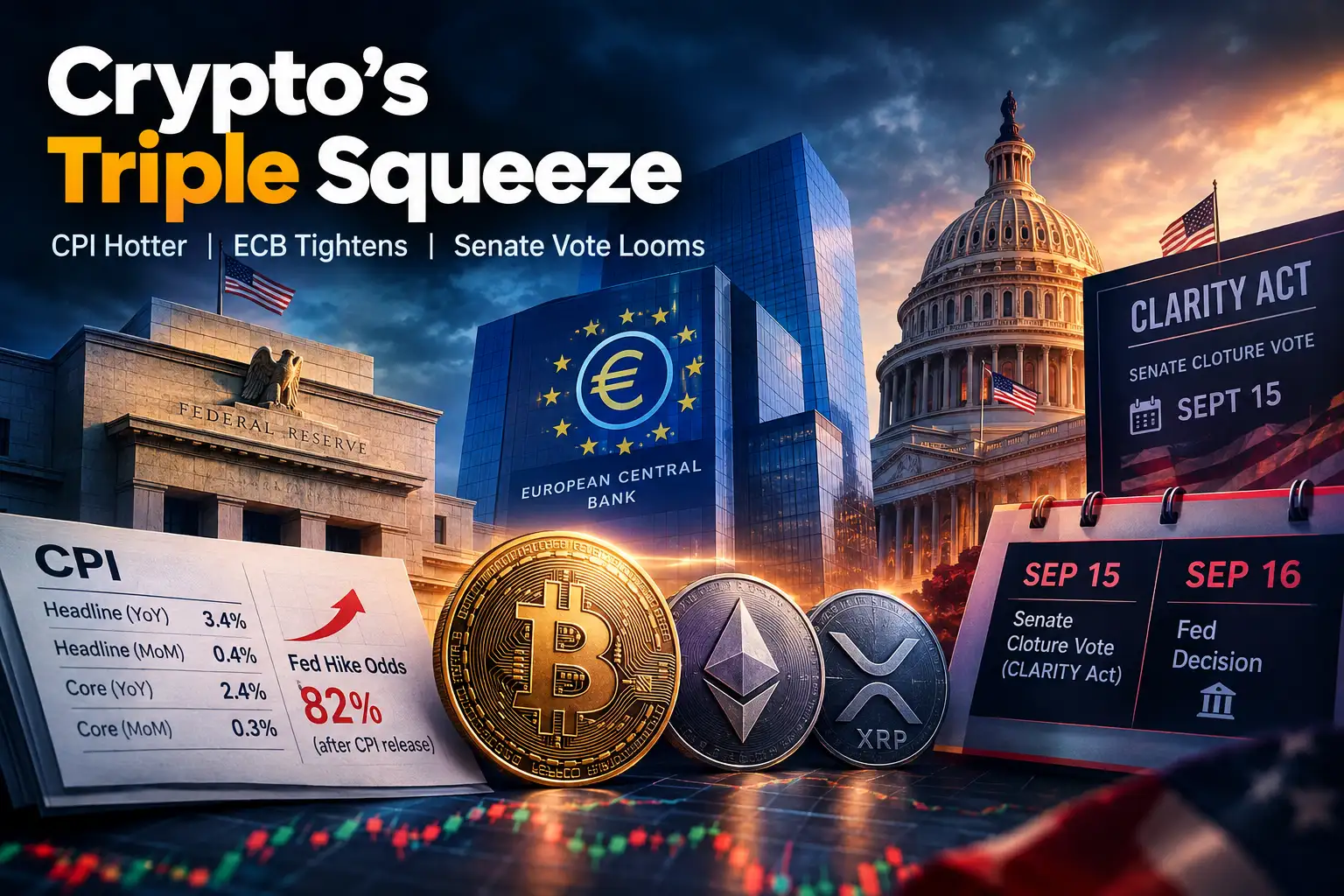
Bitcoin faces rising Fed rate-hike odds, a hawkish ECB, and a make-or-break Senate cloture vote on the CLARITY Act — all landing in the same five-day window.
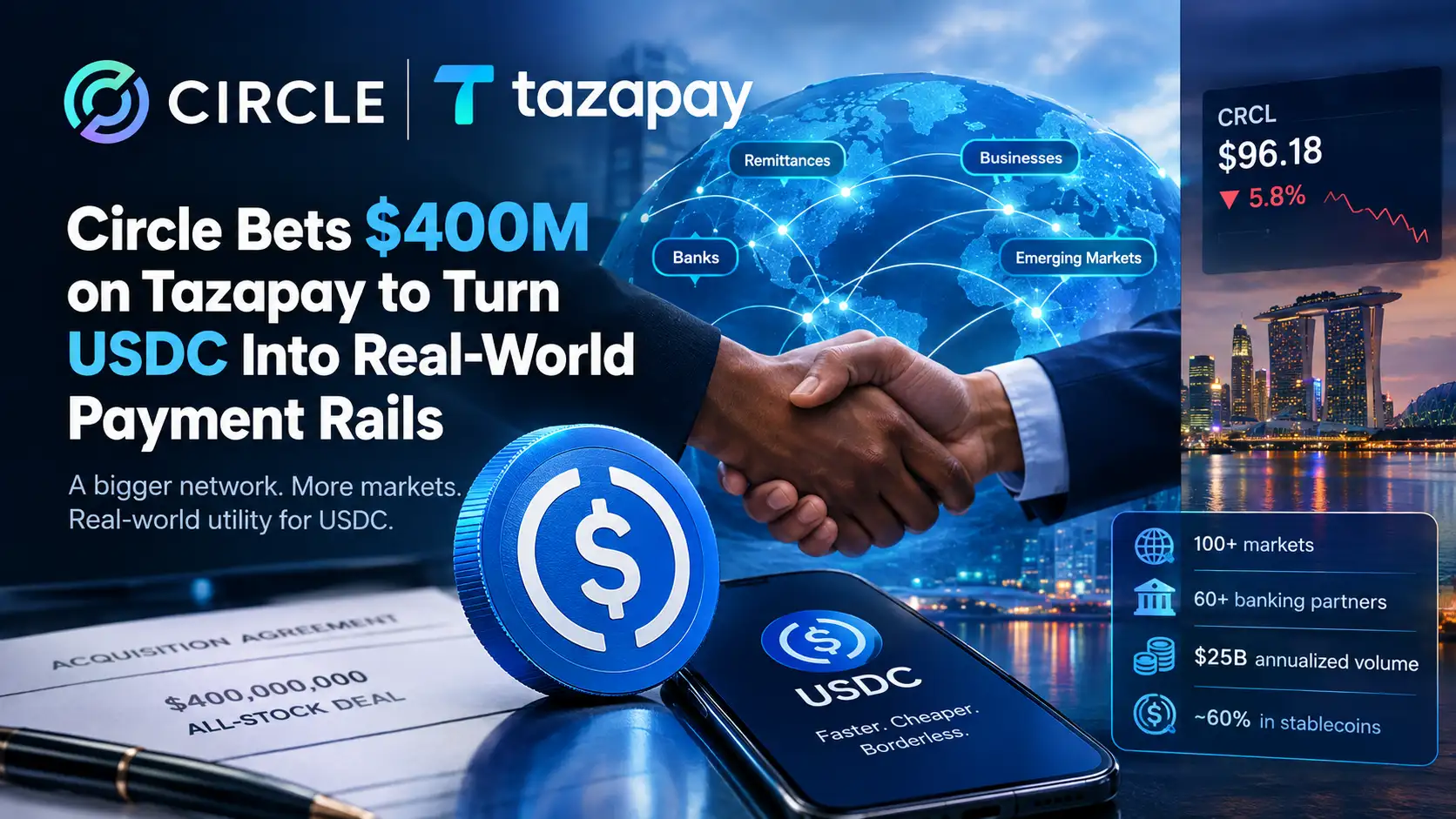
Circle's largest deal since Poloniex brings a licensed cross-border payments network in-house.
On-Chain Media is an independent, reader-funded crypto media platform. Kindly consider supporting us with a donation.
bc1qp0a8vw82cs508agere759ant6xqhcfgcjpyghk
0x18d7C63AAD2679CFb0cfE1d104B7f6Ed00A3A050
CBaXXVX7bdAouqg3PciE4HjUXAhsrnFBHQ2dLcNz5hrM
Contains the last 12 releases