
When Revolut decided to integrate a crypto purchasing feature into its app in 2017, it seemed like an experiment, as no one was seriously talking about the mass adoption of digital assets at the time.
Thus, the company became the first major neobank to allow users to buy and sell cryptocurrency directly from their smartphones. At the time, it wasn't even a “feature,” but a quiet yet very important paradigm shift — both for Revolut itself and for fintech in general.
In the early 2020s, it became clear that this move was extremely successful. The integration of digital assets became a stable channel of monetization, increasing the frequency of app openings, transaction volume, and customer loyalty.
In doing so, Revolut proved an important point: crypto is not a niche experiment, but a must-have feature for any fintech company that wants to grow and remain relevant today.
By setting a new standard for fintech companies, Revolut has effectively forced other neobanks to catch up. For example, Wirex made significant progress in 2021 by launching one of the world's first cryptocurrency-enabled debit cards, significantly ahead of many of its competitors.
In October 2022, N26 added the ability to buy and sell cryptocurrencies to its app, significantly reducing its gap with Revolut. And New York-based mobile bank Current, which initially targeted young people, integrated crypto services directly into its app that same month, transforming the platform from a simple payment tool into a full-fledged digital ecosystem.
These changes reflect user behavior: young customers now expect not just a bank, but a full-fledged financial hub. Crypto products are no longer just an add-on feature — they are setting new standards for loyalty and engagement, forcing fintech companies to rethink their offerings.
Crypto products have significantly updated the revenue model for fintech companies. Users have started trading more, storing assets in the app more often, and returning to the ecosystem more willingly.
All this has created a “retention economy” effect, where each new crypto tool increases customer LTV and opens up additional levels of monetization that were previously unavailable.
Main Sources of Income:
In recent years, CaaS (Crypto-as-a-Service) has become one of the key tools for fintech companies seeking to quickly integrate cryptocurrency into their product without having to build their own blockchain infrastructure.
Simply put, CaaS is a model in which specialized providers offer ready-made solutions for buying, selling, storing, and trading crypto assets. Companies can connect them to their services via API or use white-label solutions for complete customization under their own brand.
CaaS is gaining popularity due to several key advantages:
Among the leading CaaS providers, the following 3 should be highlighted:
This model is suitable for virtually all players in the fintech ecosystem:
CaaS allows companies to experiment with cryptocurrencies without large-scale internal development and to respond quickly to market changes. That is why this model has become a critically important component of innovation in fintech today.
looking at this trend from a modern perspective, it is easy to see a pattern: what was once just an “experiment” at Revolut has now become an almost mandatory feature for any fintech company that wants to remain competitive. What does the future hold?
According to my predictions, in 2026–2027, we will witness an even more massive wave of integrations: cryptocurrencies will become an integral part not only of mobile banks but also of marketplaces, travel services, e-commerce, and more.
Web3 integration will cease to be an “additional option” and will become the standard, on par with Apple Pay or multi-currency accounts.
After all, for those who look at fintech through the prism of the future, the question is no longer “whether to implement crypto,” but “how to do it quickly, safely, and effectively.”
On-Chain Media articles are for educational purposes only. We strive to provide accurate and timely information. This information should not be construed as financial advice or an endorsement of any particular cryptocurrency, project, or service. The cryptocurrency market is highly volatile and unpredictable.Before making any investment decisions, you are strongly encouraged to conduct your own independent research and due diligence
Tags :

0 Comments
Show More

Nvidia falls as AI-safety concerns, DOJ scrutiny of its $17 billion Groq licensing deal and profit-taking pressure weigh on shares.

Bitcoin faces rising Fed rate-hike odds, a hawkish ECB, and a make-or-break Senate cloture vote on the CLARITY Act — all landing in the same five-day window.
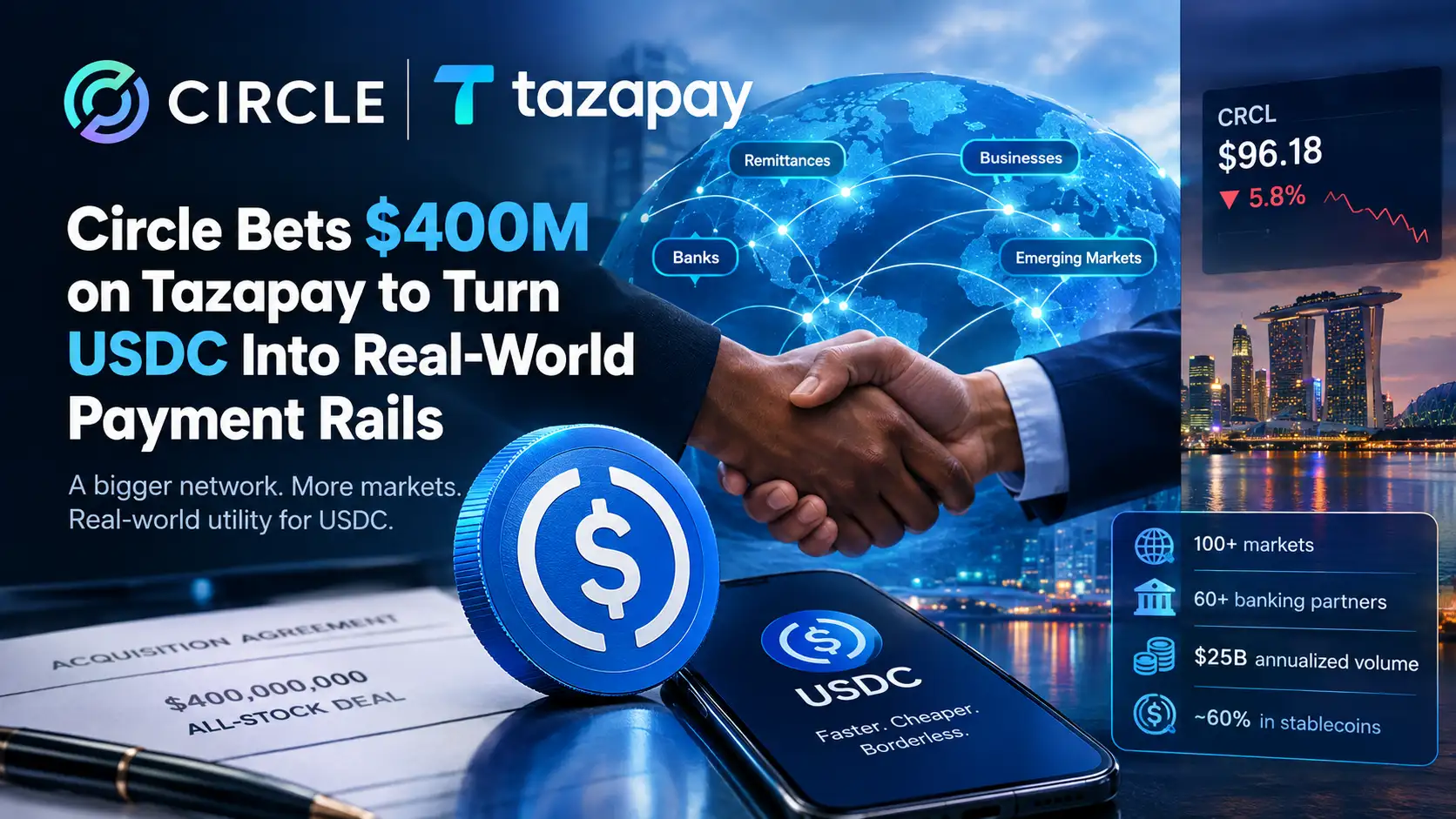
Circle's largest deal since Poloniex brings a licensed cross-border payments network in-house.
On-Chain Media is an independent, reader-funded crypto media platform. Kindly consider supporting us with a donation.
bc1qp0a8vw82cs508agere759ant6xqhcfgcjpyghk
0x18d7C63AAD2679CFb0cfE1d104B7f6Ed00A3A050
CBaXXVX7bdAouqg3PciE4HjUXAhsrnFBHQ2dLcNz5hrM
Contains the last 12 releases