The promise was seductive: true digital ownership, decentralized game economies, and player-first ecosystems. Web3 gaming was supposed to disrupt a legacy industry by putting control and value into the hands of players. Billions were invested. Teams scaled fast. Tokens surged.
And yet, the results are sobering. In the first half of 2025 alone, multiple high-profile Web3 games and platforms have collapsed, leaving behind abandoned communities and vaporized value.
Blast Royale, a battle royale title with real-time blockchain integration, will shut down by the end of June. The studio raised $5 million in mid-2022.
Battlebound, creators of Evaverse and Anterris, recently closed operations after raising over $4.8 million from firms like a16z and Play Ventures. TreasureDAO, once a central player in the Arbitrum ecosystem, is shutting down its own chain.
These aren't isolated incidents. According to recent figures, as many as 75–93% of Web3 gaming projects have either failed or become inactive. Investors, players, and developers alike are beginning to ask: Was the vision flawed, or was the execution broken?
Web3 promised players would "own their assets." But what does ownership mean when the underlying logic, game servers, and item behaviors remain centralized? As one Redditor put it, “You don’t own sh*t. The devs can just make the game ignore your NFT.”

This disconnect has fueled criticism—and rightly so. NFT-based assets that rely on off-chain logic are little more than receipts. If a game dies, the asset dies with it. Worse, players often discover they have no legal or functional recourse when the platform disappears.
The solution? Asset logic and metadata must be fully on-chain—or, at the very least, architected in a way that gives real durability and control to players.
It’s not just a problem in Web3. In traditional gaming, the illusion of ownership runs deep. Buy a game on Steam or PlayStation, and you’ll discover you didn’t purchase the game—you licensed the right to use it under specific terms.
Most EULAs (End User License Agreements) clarify that your access can be revoked, modified, or removed at any time. If the servers go down or the platform decides to delist the title, that access can vanish without compensation. Blockchain was supposed to fix this—but it hasn’t yet.
Misaligned Incentives and Unsustainable Economies
Play-to-earn was the rallying cry of 2021 and 2022. But most of those games built economic systems that required constant new user inflows to survive. Axie Infinity’s well-documented crash—where its SLP token fell from $0.40 to under $0.005—showed how quickly unsustainable rewards models collapse.
The problem isn’t just with game design. It’s systemic. Most Web3 gaming startups pursued a token-first go-to-market strategy, prioritizing speculative financial instruments over actual gameplay. Projects were judged by fully diluted market caps, not user retention. This speculative DNA continues to haunt the space.
A better path forward would prioritize utility-first tokens, capped emission models, and in-game assets whose value is tied to fun and function—not hype. Some platforms, like Genesis Engine, are exploring how to help developers structure game economies around sustainability rather than speculation, with built-in compliance and economic modeling support.
For mainstream adoption to take root, regulatory clarity is non-negotiable. Yet Web3 gaming still largely exists in legal limbo. Projects may inadvertently violate securities laws, AML regulations, or even gambling statutes depending on their jurisdiction and mechanics.
Many developers—especially small studios—lack the legal expertise to navigate these waters. A compliant framework for onboarding, transactions, loot systems, and revenue sharing is still rare. This is an area where infrastructure platforms could play a major role.
For example, Genesis Engine’s concept of acting as a licensed custodian while abstracting legal complexity away from developers reflects a trend we’ll likely see more of: infrastructure taking on regulatory load.
The DeFi world isn’t the only sector plagued by hacks. Web3 games are increasingly targeted by cybercriminals. From phishing campaigns to smart contract vulnerabilities, the attack surface is wide. In one notable 2025 case, malware disguised as Web3 games was used to steal wallets and credentials at scale.
Despite these risks, many projects still skip third-party audits or fail to implement basic exploit mitigation strategies. Until security becomes non-negotiable—not optional—the reputation of the entire sector will continue to suffer.
Fragmented Distribution, Friction Everywhere
Traditional games launch on Steam, Epic, or consoles. Web3 games? Discord announcements, token-gated test builds, and Twitter campaigns. No central hub. No onboarding standard. Players are asked to install custom wallets, bridge tokens, and navigate obscure web apps—all before playing a single match.
This fragmented experience is a massive barrier to mainstream adoption. Platforms that can provide a unified entry point—while hiding blockchain complexity from the player—will be critical. Think “Steam for Web3,” but built from the ground up with wallet abstraction, fiat rails, and game-first discovery.
Investors have played a pivotal role in shaping the trajectory of Web3 gaming—often for better—but also, far too often—for worse. Many have chased projects based on hype, shiny graphics, or teams with impressive résumés from legacy gaming or Web2 startups. Unfortunately, those credentials don’t always translate into success in the radically different environment of decentralized gaming.

Recent closures like Battlebound and TreasureDAO show that even well-funded, high-profile teams aren’t immune to collapse.
The problem isn’t just that these teams fail—failure is part of innovation—but that their magnetic pull on capital starves genuinely promising, lower-profile builders of the support they need. If your game isn’t flashy, your team isn’t ex-Blizzard, or your concept isn't "sexy," good luck raising funds.
This capital misallocation has created a skewed ecosystem. Infrastructure projects—often the most needed and foundational—are ignored because they don’t dazzle. But making Web3 gaming viable at scale requires boring, necessary things: compliance layers, stable backend systems, and modular economies.
If Web3 gaming is going to mature, investors need to mature too. That means:
Platforms like Genesis Engine are emerging from this frustration—not to ride the hype, but to build the rails that make Web3 gaming viable, sustainable, and compliant. But they—and projects like them—need backing.
Web3 gaming isn’t dead. But it’s in urgent need of recalibration. The early wave focused on speculation and gimmicks. The next wave must focus on design, durability, and trust.
This includes:
There are real opportunities still here. Players do want to own and trade their digital goods. Developers do want monetization models beyond ads and battle passes. And investors still believe in the thesis of interoperable gaming economies.
But belief alone won’t be enough.
It’s time for builders to stop selling a dream—and start delivering a future that actually works. And maybe, just maybe, this time we’ll get it right.
On-Chain Media articles are for educational purposes only. We strive to provide accurate and timely information. This information should not be construed as financial advice or an endorsement of any particular cryptocurrency, project, or service. The cryptocurrency market is highly volatile and unpredictable.Before making any investment decisions, you are strongly encouraged to conduct your own independent research and due diligence
Tags :

0 Comments
Show More

Nvidia falls as AI-safety concerns, DOJ scrutiny of its $17 billion Groq licensing deal and profit-taking pressure weigh on shares.

Bitcoin faces rising Fed rate-hike odds, a hawkish ECB, and a make-or-break Senate cloture vote on the CLARITY Act — all landing in the same five-day window.
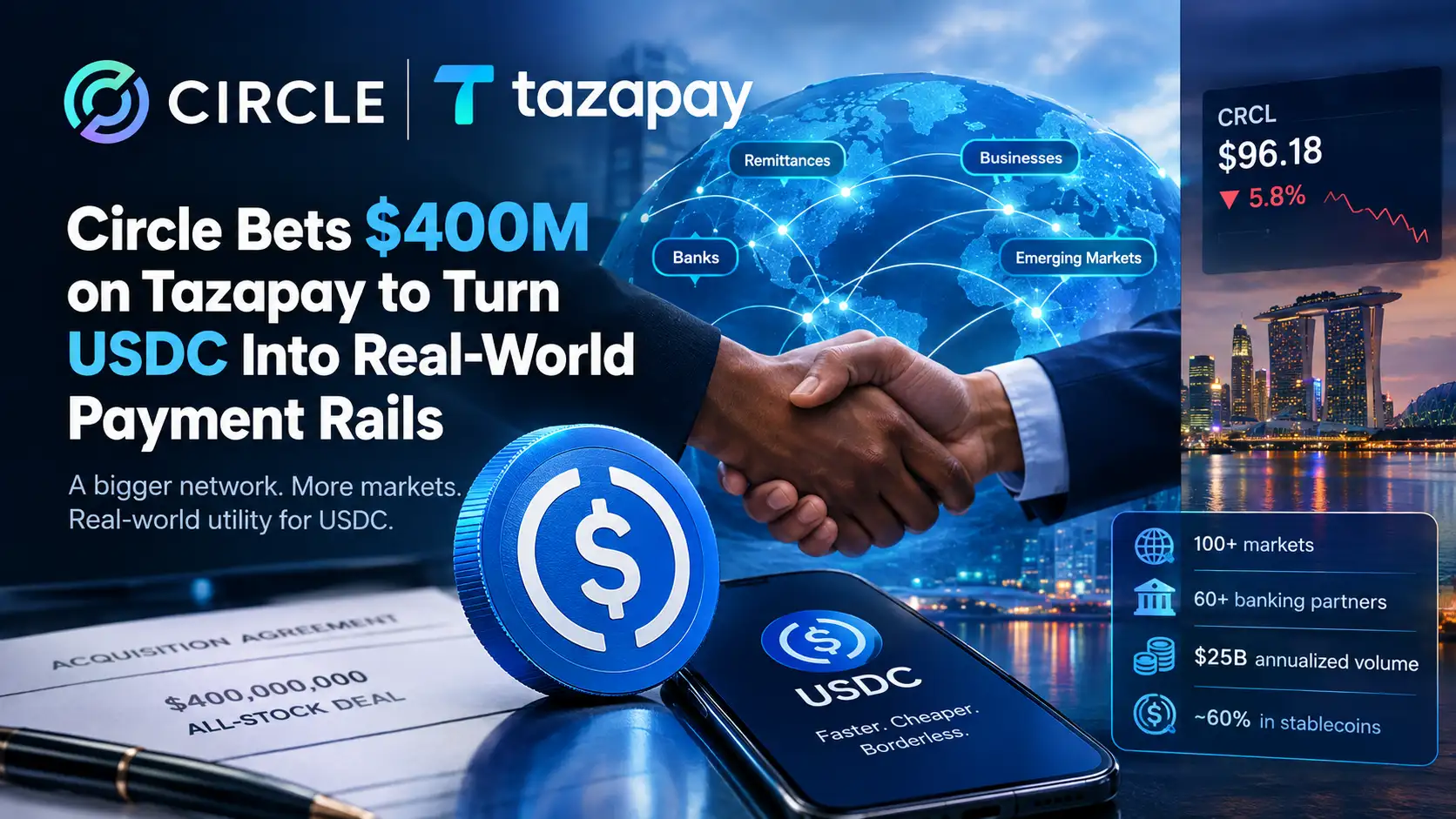
Circle's largest deal since Poloniex brings a licensed cross-border payments network in-house.
On-Chain Media is an independent, reader-funded crypto media platform. Kindly consider supporting us with a donation.
bc1qp0a8vw82cs508agere759ant6xqhcfgcjpyghk
0x18d7C63AAD2679CFb0cfE1d104B7f6Ed00A3A050
CBaXXVX7bdAouqg3PciE4HjUXAhsrnFBHQ2dLcNz5hrM
Contains the last 12 releases