
Quantum computing just took center stage in the crypto world, thanks to a bold challenge from Project Eleven.
The quantum computing research firm announced its “Q-Day Prize” competition on April 17, 2025, offering a hefty 1 $BTC—valued at roughly $82,967 as Bitcoin surged today—to anyone who can crack Bitcoin’s longest key using a quantum computer within the next year.
The initiative aims to quantify the looming quantum threat to Bitcoin’s cryptography and spur the development of quantum-resistant security solutions. For an industry already buzzing with regulatory shifts and market volatility, this challenge is a wake-up call: the quantum clock is ticking
Project Eleven, a firm known for pushing the boundaries of quantum cryptography, dropped the news via Cointelegraph earlier today.
The competition’s goal is straightforward but daunting: participants must use a quantum computer to break the elliptic curve cryptography (ECC) that secures Bitcoin’s private keys, specifically targeting the longest key in Bitcoin’s ecosystem.
While the announcement didn’t specify the exact key length, Bitcoin typically relies on 256-bit ECC keys, considered secure against classical computers but vulnerable to quantum attacks.
The prize—1 Bitcoin—is more than a symbolic gesture. At Bitcoin’s current price of $82,967 (up 7% today after Trump’s tariff pause), it’s a significant incentive for researchers, quantum computing startups, and even tech giants to jump in.
The competition runs for one year, ending on April 17, 2026, giving participants a tight window to showcase quantum computing’s potential—or its limitations.
Project Eleven framed the challenge as a critical step toward understanding “Q-Day,” the hypothetical moment when quantum computers can break classical cryptographic systems like those underpinning Bitcoin.
“We’re not just testing quantum tech; we’re accelerating the race for quantum-resistant solutions,” a Project Eleven spokesperson told Cointelegraph. The firm hopes the competition will highlight vulnerabilities in Bitcoin’s current security model while encouraging innovation in post-quantum cryptography (PQC).
Quantum computing poses an existential threat to blockchain systems like Bitcoin, which rely on cryptographic algorithms such as ECC and SHA-256 for security. Classical computers would take billions of years to crack a 256-bit key through brute force.
But a sufficiently powerful quantum computer, using algorithms like Shor’s algorithm, could theoretically solve the same problem in hours or even minutes by factoring large numbers exponentially faster.
For Bitcoin, this means a quantum breakthrough could allow an attacker to derive private keys from public keys, effectively unlocking wallets and draining funds.
The “longest key” in Bitcoin’s ecosystem likely refers to a key associated with a high-value or historically significant address—potentially one tied to Satoshi Nakamoto’s estimated 1.1 million BTC fortune, which has remained untouched since Bitcoin’s early days.
Cracking such a key would not only claim the prize but also send shockwaves through the crypto market, exposing the fragility of current blockchain security.
However, quantum computing isn’t there yet. Current quantum systems, like those from IBM or Google, operate with limited qubits and high error rates, far from the millions of stable qubits needed to break ECC.
Project Eleven’s challenge is as much a test of quantum hardware progress as it is a call to action for the crypto industry to prepare for the future.
The “Q-Day Prize” isn’t just about breaking things—it’s about building better defenses. Bitcoin and other blockchains have been exploring quantum-resistant cryptography for years, but progress has been slow.
Post-quantum cryptography, which uses algorithms like lattice-based or hash-based signatures, aims to withstand quantum attacks. The U.S. National Institute of Standards and Technology (NIST) has been standardizing PQC algorithms since 2016, with several candidates—like CRYSTALS-Kyber and CRYSTALS-Dilithium—already selected for implementation.
Bitcoin developers have discussed quantum resistance as well, but implementing new cryptography on a decentralized network is a monumental task.
Hard forks or soft forks would be required to transition Bitcoin to quantum-safe signatures, a process that could take years and face resistance from miners and node operators.
Ethereum, Solana, and other blockchains face similar hurdles, though newer protocols with smaller user bases might adapt faster.
Project Eleven’s competition could light a fire under these efforts. By quantifying the quantum threat—either through a successful key crack or by proving current quantum tech isn’t up to the task—the challenge provides a benchmark for the industry.
If someone claims the 1 BTC prize, it’ll be a stark warning that Q-Day is closer than expected. If no one succeeds, it buys crypto developers more time to fortify their networks.
The implications of the “Q-Day Prize” extend far beyond the competition itself:
Project Eleven’s challenge lands at a pivotal moment for crypto. Bitcoin is already navigating a volatile landscape, with prices swinging on U.S. regulatory shifts and global trade tensions.
Today’s 7% surge, driven by Trump’s tariff pause, contrasts with January’s $100,000 peak and recent selloffs tied to trade war fears.
Meanwhile, stablecoins like Ethena’s USDe are trending, and ventures like Hong Kong’s HashKey are blending AI with blockchain. Amid all this, the specter of quantum computing adds another layer of uncertainty.
On X, reactions to the “Q-Day Prize” are mixed. Some users see it as a necessary stress test, with one posting, “Better to know now than when a quantum whale drains Satoshi’s wallet.”
Others worry about the optics, arguing that highlighting Bitcoin’s vulnerabilities could spook investors. Either way, the competition has sparked a conversation that the crypto industry can’t afford to ignore.
As the clock ticks toward April 2026, all eyes will be on quantum researchers—and on Bitcoin’s developers. Will the “Q-Day Prize” herald a new era of blockchain security, or expose cracks that can’t be fixed in time? One thing’s certain: the future of crypto just got a lot more quantum.
On-Chain Media articles are for educational purposes only. We strive to provide accurate and timely information. This information should not be construed as financial advice or an endorsement of any particular cryptocurrency, project, or service. The cryptocurrency market is highly volatile and unpredictable.Before making any investment decisions, you are strongly encouraged to conduct your own independent research and due diligence
Tags :

0 Comments
Show More
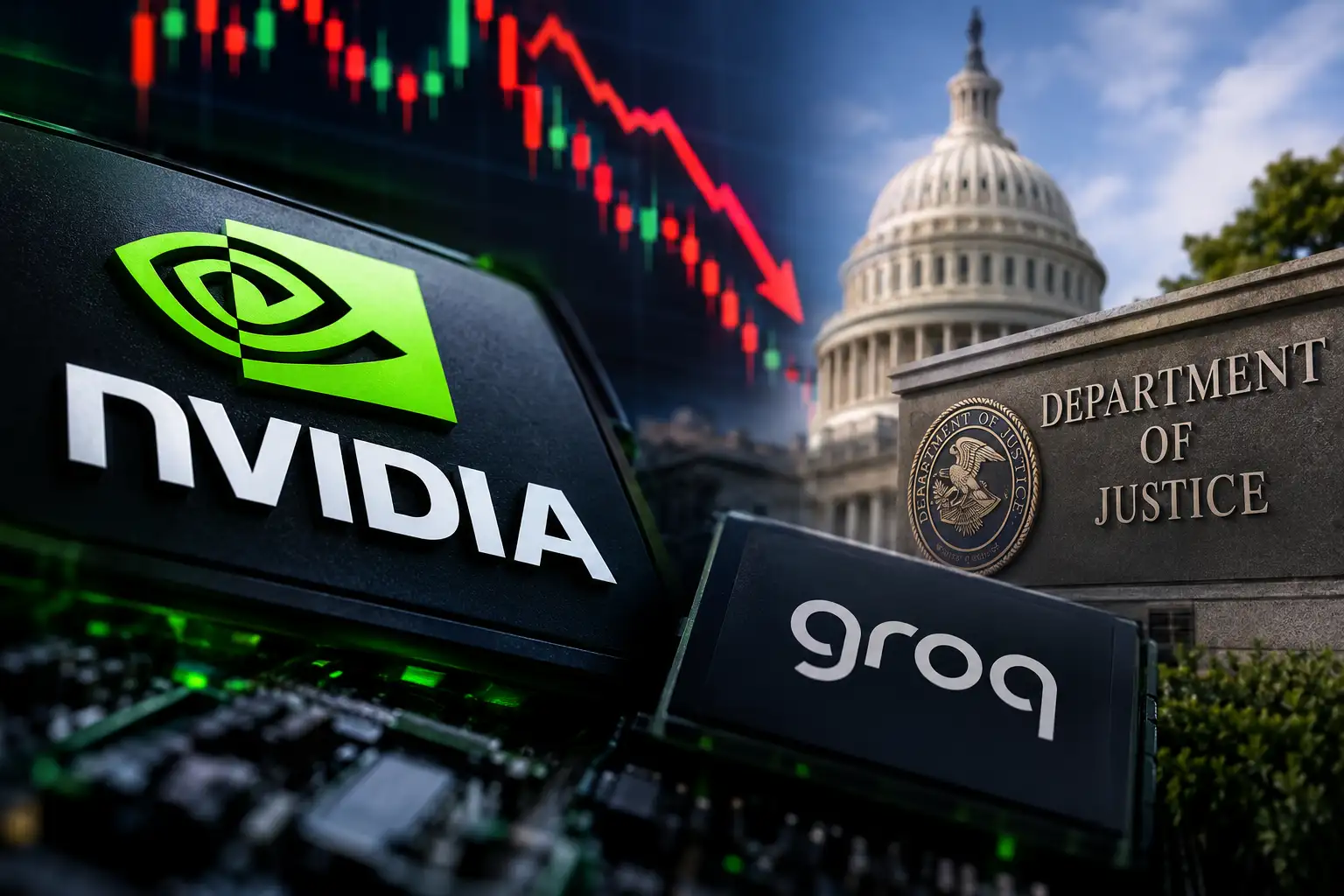
Nvidia falls as AI-safety concerns, DOJ scrutiny of its $17 billion Groq licensing deal and profit-taking pressure weigh on shares.

Bitcoin faces rising Fed rate-hike odds, a hawkish ECB, and a make-or-break Senate cloture vote on the CLARITY Act — all landing in the same five-day window.
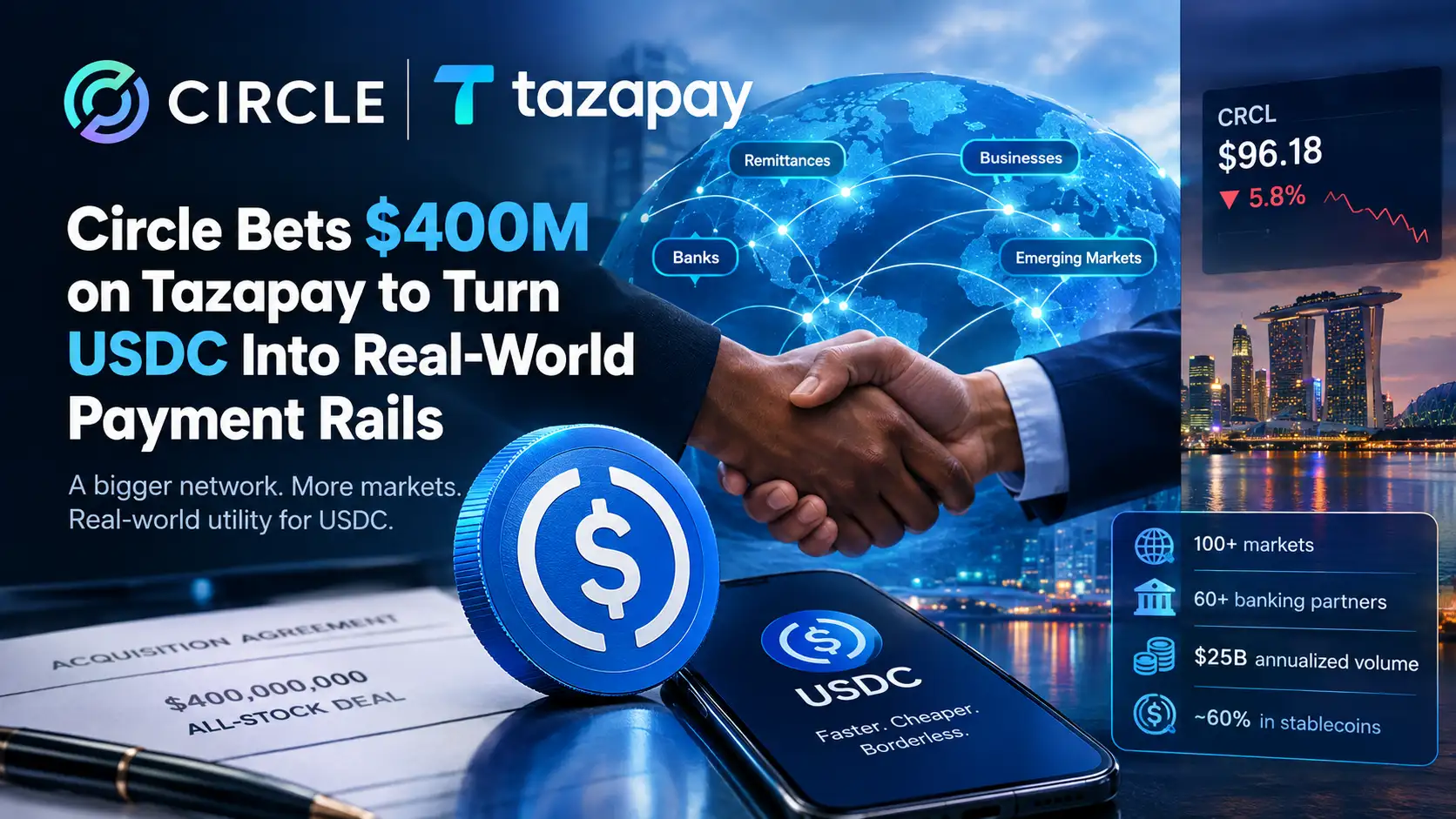
Circle's largest deal since Poloniex brings a licensed cross-border payments network in-house.
On-Chain Media is an independent, reader-funded crypto media platform. Kindly consider supporting us with a donation.
bc1qp0a8vw82cs508agere759ant6xqhcfgcjpyghk
0x18d7C63AAD2679CFb0cfE1d104B7f6Ed00A3A050
CBaXXVX7bdAouqg3PciE4HjUXAhsrnFBHQ2dLcNz5hrM
Contains the last 12 releases